
Shimba Hills National Reserve is one of Kenya’s most important coastal conservation landscapes because it protects a rare mix of coastal forest, grassland, shrubland, sable antelope habitat, elephants, threatened birds, endemic amphibians, butterflies, rare plants, water catchments, and culturally significant Kaya forest landscapes in Kwale County.
The reserve should not be understood only as a day-trip safari from Diani or Mombasa. Its deeper importance comes from the way forest, grassland, water, wildlife, people, and tourism meet in a compact coastal hill ecosystem. The visitor sees waterfalls, elephants, sable antelope, forest roads, viewpoints, birds, and butterflies; the conservation planner sees habitat balance, elephant pressure, rare species management, catchment protection, invasive plants, local livelihoods, and long-term ecological resilience.
Kenya Wildlife Service describes Shimba Hills as one of the largest coastal rainforest areas in the region, identifies it as the Paradise of the Sable antelope, and notes that the reserve has Kenya’s last breeding herd of rare sable antelope, alongside elephants, giraffes, leopards, hyenas, buffalo, waterbuck, bush pigs, colobus monkeys, duikers, reptiles, butterflies, and 111 recorded bird species.
Quick Conservation Facts About Shimba Hills
| Conservation Topic | Key Point |
|---|---|
| Official protected area | Shimba Hills National Reserve |
| County | Kwale County, Kenya |
| Main conservation identity | Coastal forest, sable antelope, elephants, water catchment, rare plants, birds, butterflies |
| Signature species | Sable antelope |
| Major large mammal issue | Elephant conservation and human-wildlife conflict |
| Main habitat types | Forest, grassland, shrubland, scrub, riverine and waterfall habitats |
| Important cultural layer | Kaya forests linked to Mijikenda heritage |
| Ecological role | Biodiversity refuge, water catchment, forest-grassland mosaic, climate-buffering landscape |
| Visitor responsibility | Pay official fees, follow trails, avoid disturbance, use responsible guides, respect wildlife |
| Best conservation framing | Shimba Hills is a coastal biodiversity reserve, not a smaller version of Tsavo or Maasai Mara |
Why Shimba Hills Matters Ecologically
Shimba Hills matters because it sits in a rare ecological position: a coastal hill system rising from the lowlands near the Indian Ocean, where rainforest patches, grassland, scrub, plantations, valleys, ridges, waterfall corridors, and local communities all interact.
The Key Biodiversity Areas profile describes Shimba Hills as a confirmed terrestrial KBA with a heterogeneous mosaic of forest, scrub, grassland, and plantations. It records Kaya Kwale and Kaya Longomwagandi within the reserve, notes a fenced elephant corridor toward Mwaluganje Forest Reserve, and highlights threatened and restricted-range birds, endemic frogs, rare plants, butterflies, and Kenya’s only sable antelope population.
The ecological identity of Shimba Hills is built around five relationships:
- Forest and grassland — both are necessary; neither should be treated as secondary.
- Elephants and vegetation — elephants are valuable, but they also shape and stress habitats.
- Sable antelope and open habitat — the species needs grassland and edge conditions, not closed forest alone.
- Water and people — hill forests and streams support wildlife and coastal communities.
- Tourism and conservation — visitor income and attention can support protection only when tourism is managed responsibly.
Shimba Hills as a Coastal Forest Conservation Landscape
Shimba Hills is part of Kenya’s coastal forest system, a landscape type with high biodiversity, high endemism, and heavy pressure from land use, settlement, extraction, and fragmentation.
The UNESCO tentative listing for the Coastal Forests of Kenya identifies Shimba Hills as a coastal rainforest, woodland, and grassland area in Kwale County, about 15 km from the coast, and describes the flora as exceptionally rich, with about 1,100 plant taxa, around 280 endemic to the Shimba Hills area, and nearly a fifth considered rare globally or in Kenya.
That plant diversity changes how the reserve should be interpreted. A visitor who only asks whether there are elephants misses a larger story: Shimba Hills is also a botanical refuge, a water source, a birding landscape, and a living archive of coastal forest evolution.
The Forest-Grassland Mosaic: The Core Ecology of Shimba Hills
Shimba Hills is often described as coastal rainforest, but that phrase alone is incomplete. The reserve’s conservation value comes from a mosaic, not from one uniform habitat.
| Habitat Type | Ecological Role | Visitor Experience |
|---|---|---|
| Coastal forest | Supports birds, primates, butterflies, reptiles, amphibians, rare plants, shade, and moisture | Forest drives, bird calls, monkeys, cool trail sections |
| Grassland | Supports sable antelope, grazers, open-country birds, and visibility | Best areas to scan for sable and other antelope |
| Shrubland and scrub | Provides browse, cover, transition zones, nesting habitat, and small mammal habitat | Wildlife may appear briefly at edges |
| Waterfall and stream zones | Support amphibians, insects, plants, birds, and visitor recreation | Sheldrick Falls and moist forest trail experience |
| Ridges and viewpoints | Shape rainfall, wind, vegetation, and raptor movement | Ocean View Point, Pengo, landscape photography |
| Kaya forest areas | Combine biodiversity and Mijikenda cultural value | Conservation meaning beyond wildlife tourism |
Expert interpretation
Shimba Hills is a coastal forest-grassland tension zone. Conservation here cannot simply aim to grow more forest everywhere. Sable antelope need open grassland and edge conditions, while forest birds, amphibians, orchids, cycads, butterflies, and primates depend on forest structure. The reserve’s future depends on protecting habitat diversity, not just maximizing one habitat type.
Sable Antelope Conservation in Shimba Hills
The sable antelope is the defining conservation species of Shimba Hills National Reserve. It is the animal that turns Shimba Hills from a convenient coastal day trip into a nationally significant wildlife refuge.
A peer-reviewed study by Ochieng, Okeyo, and Tamooh on the Roosevelt sable antelope in Shimba Hills found that the population had declined considerably and lacked population stability, although forage availability and quality were not the main limiting factors. The authors recommended management strategies focused on improving reproduction and understanding competition with other large herbivores.
Why sable antelope conservation is difficult
- The species depends on suitable grassland and edge habitat.
- Small or isolated populations are vulnerable to demographic instability.
- Habitat change can reduce visibility and access to preferred feeding areas.
- Competition with other herbivores may affect habitat use.
- Tourism disturbance can matter if vehicles pressure animals.
- Monitoring is essential because casual sightings do not reveal population health.
What visitors should understand
Seeing sable antelope is special, but the more important point is this: their continued presence depends on active habitat management, careful monitoring, and low-disturbance tourism. A good guide should explain why grassland matters, not simply point at the animal.
Elephant Conservation and the Mwaluganje Corridor
Elephants are among the most visible conservation symbols of Shimba Hills, but their story is not simple. They are charismatic, ecologically powerful, and important for tourism, yet they can also create pressure on forests, farms, crops, and human safety when space is limited.
Mwaluganje Elephant Sanctuary describes itself as a 60,000-acre elephant conservation area created to provide a wildlife corridor for elephant movement between Mwaluganje Forest Reserve to the north and Shimba Hills National Reserve to the south.
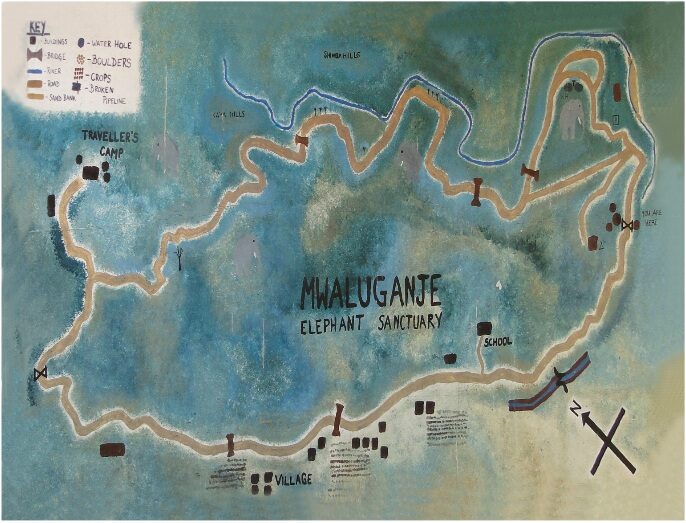
The Sheldrick Wildlife Trust adds the social side of the same conservation issue: Mwaluganje was established as one of Kenya’s early community-owned wildlife sanctuaries to help reduce escalating human-wildlife conflict in the Shimba Hills area, which it says is home to about 500 elephants.
Why elephants are both a strength and a challenge
| Conservation Issue | Why It Matters |
|---|---|
| Elephant movement | Elephants need space beyond the formal reserve boundary |
| Forest pressure | Concentrated elephants can affect regeneration and forest structure |
| Human-wildlife conflict | Crop damage and safety concerns affect local tolerance |
| Corridor protection | Movement routes reduce pressure inside fenced areas |
| Tourism value | Elephant sightings help visitors understand the reserve’s importance |
| Community benefit | Conservation must make sense for people living near elephant routes |
Expert local tip
When guides talk about elephants in Shimba Hills, ask where they are moving from and to, not only where they were seen today. That question turns a sighting into a conservation lesson about corridors, community land, fences, farms, and habitat pressure.
Birds, Butterflies and Smaller Biodiversity
Shimba Hills is often marketed through sable antelope, elephants, and Sheldrick Falls, but its smaller biodiversity is just as important. Birds, butterflies, reptiles, amphibians, insects, and plants are not supporting details; they are part of the reserve’s core ecological value.
Bird conservation
Shimba Hills supports coastal forest birds and species associated with the East African coastal biome. BirdLife’s East Coast akalat factsheet records Shimba Hills as one of the Kenyan sites for the species, linking the reserve to the wider network of coastal forest bird conservation.
Butterfly and insect value
Butterflies in Shimba Hills are not only attractive to photographers. They indicate habitat quality, plant diversity, microclimate conditions, and food-web complexity. A forest with diverse butterflies is often a forest with layered plant communities and ecological continuity.
Visitor advice
- Carry binoculars.
- Stop at forest edges.
- Listen for birds before scanning.
- Notice butterflies near damp soil, flowers, and sunlit clearings.
- Avoid rushing through shaded roads.
- Treat small wildlife as part of the main experience.
Reptiles and Amphibians: Shimba Hills as a Herpetofauna Hotspot
One of the strongest research-backed ecological facts about Shimba Hills is its importance for reptiles and amphibians.
A peer-reviewed study in Zoological Research found that the Shimba Hills ecosystem is the richest herpetofauna area in Kenya, with 89 reptile species and 38 amphibian species, and described the ecosystem as a biogeographic crossroads between coastal forests and nearby Eastern Arc biodiversity patterns.
Why this matters
Reptiles and amphibians are sensitive to moisture, forest structure, leaf litter, stream systems, microhabitats, and fragmentation. Their diversity tells us that Shimba Hills is ecologically complex even when large mammals are not visible.
| Species Group | What They Indicate |
|---|---|
| Frogs | Moisture, stream health, forest microhabitats |
| Caecilians | Soil and underground habitat quality |
| Lizards | Sunlight, rock, vegetation structure |
| Snakes | Functional food webs and prey availability |
| Geckos | Microhabitat diversity |
| Amphibian endemics | Long-term biogeographic importance |
Visitor rule
Do not handle reptiles or amphibians. Do not turn logs, disturb leaf litter, or collect animals. The best wildlife observation in Shimba Hills is low-impact observation.
Rare Plants and Botanical Conservation
Shimba Hills is botanically exceptional. Its plant diversity is not a background feature; it is one of the reserve’s strongest claims to conservation importance.
Why plant conservation matters here
- Rare plants support specialist insects, birds, and other organisms.
- Forest structure affects water catchment function.
- Grasslands support sable antelope.
- Scrub and shrubland provide transition habitat.
- Plant diversity supports butterfly diversity.
- Local climate and rainfall patterns depend partly on vegetation cover.
- Some plant communities have cultural and historical significance.
Visitor interpretation
A guide should not describe Shimba Hills only through animals. The correct ecological story is that plants create the reserve’s wildlife possibilities. Without forest, grassland, scrub, flowering plants, and water-loving vegetation, there would be no sable antelope habitat, no butterfly richness, no forest birds, and no Sheldrick Falls landscape as visitors experience it.
Kaya Forests and Cultural Ecology
Shimba Hills includes more than biological value. Kaya forests within the reserve connect biodiversity with Mijikenda cultural history, sacred landscapes, and coastal identity.
This matters because conservation writing often makes the mistake of presenting protected areas as empty wilderness. Shimba Hills is not empty. It is surrounded by people, farms, roads, settlements, sacred forests, conservation institutions, and tourism economies.
Conservation lesson
A strong Shimba Hills conservation page should explain that ecology and culture are not separate here. Kaya forests remind visitors that protected landscapes in coastal Kenya can hold spiritual, historical, botanical, and wildlife value at the same time.
Water Catchment and Climate Function
Shimba Hills is also a water landscape. Its forests, hills, streams, and rainfall patterns influence water availability for wildlife and communities around Kwale, Diani, Ukunda, and the wider coast.
Why the water catchment matters
| Function | Conservation Importance |
|---|---|
| Stream flow | Supports wildlife, vegetation, and communities |
| Forest cover | Helps regulate runoff and soil moisture |
| Waterfall systems | Create visitor value and microhabitats |
| Wet forest patches | Support amphibians, insects, plants, and birds |
| Coastal support | Hill water systems matter beyond the reserve boundary |
Expert local tip
If you visit Sheldrick Falls after rain, do not treat muddy trails only as inconvenience. The same rain that makes the path slippery also powers the waterfall, recharges streams, supports amphibians, and keeps the coastal forest functioning. Good planning means respecting both the beauty and the risk.
Main Conservation Threats Facing Shimba Hills
Shimba Hills is valuable partly because it is pressured. The reserve faces ecological stress from both inside and outside its boundaries.
| Threat | What It Affects |
|---|---|
| Habitat fragmentation | Wildlife movement, gene flow, elephant routes, forest continuity |
| Elephant pressure | Forest regeneration, farms, community tolerance |
| Human-wildlife conflict | Local livelihoods and support for conservation |
| Invasive plants | Native vegetation, grassland structure, habitat quality |
| Fire mismanagement | Grassland condition and forest edges |
| Illegal resource extraction | Forest integrity and wildlife security |
| Tourism pressure | Trails, litter, noise, wildlife disturbance |
| Climate variability | Water, flowering, amphibians, trail condition, vegetation stress |
| Road disturbance | Edge effects, erosion, wildlife movement |
| Weak interpretation | Visitors leave without understanding why the reserve matters |
The real conservation challenge
The central challenge is not simply protecting animals from poaching. It is maintaining a functional mosaic where sable antelope, elephants, forests, grasslands, water, birds, plants, butterflies, communities, and tourism can coexist.
How Weather and Planning Connect to Conservation
The fees, hours, weather, and planning cluster is not separate from ecology. How visitors plan their trip affects the reserve.
| Planning Topic | Conservation Link |
|---|---|
| Entrance fees | Support official protected-area systems and visitor management |
| Opening hours | Reduce unsafe movement and uncontrolled disturbance |
| eCitizen payment | Formalizes fee collection and reduces informal gate confusion |
| Weather planning | Prevents trail damage, accidents, and rushed decisions |
| Proper footwear | Reduces off-trail shortcuts and erosion risk |
| Carrying water | Reduces pressure to abandon safe pacing on trails |
| Guide or ranger use | Improves safety and interpretation |
| Waste control | Protects animals, trails, streams, and picnic areas |
| Early start | Reduces heat stress and rushed driving |
| Realistic itinerary | Reduces pressure on guides to speed, crowd animals, or skip rules |
A visitor who starts late, rushes Sheldrick Falls, litters at a viewpoint, pushes a vehicle too close to elephants, or treats the reserve like a beach add-on is not practicing responsible tourism.
Sustainable Tourism in Shimba Hills
Sustainable tourism in Shimba Hills means using visitor activity to strengthen conservation understanding rather than turning the reserve into a checklist of animals and photo stops.
Responsible visitor actions
- Pay official fees.
- Use authorized guides and rangers where needed.
- Keep distance from elephants and buffalo.
- Stay on designated roads and trails.
- Carry out all litter.
- Do not feed monkeys or birds.
- Do not collect plants, insects, shells, rocks, or animal remains.
- Keep noise low around wildlife.
- Avoid pressuring drivers to approach animals.
- Learn about sable antelope before visiting.
- Ask guides about habitat, not only sightings.
- Support local conservation-aware businesses.
What a conservation-minded tour should include
| Tour Element | Why It Matters |
|---|---|
| Early departure | Better wildlife viewing and lower heat stress |
| Slow driving | Reduces disturbance and improves interpretation |
| Sable antelope context | Connects visitors to the reserve’s flagship conservation issue |
| Elephant corridor explanation | Links sightings to landscape-scale conservation |
| Sheldrick Falls safety briefing | Protects visitors and trail habitat |
| Birding and butterfly stops | Broadens wildlife understanding |
| Waste-free picnic | Reduces pollution and wildlife feeding risk |
| Local guide interpretation | Connects conservation with community benefit |
FAQs About Shimba Hills Conservation and Ecology
Why is Shimba Hills National Reserve important?
Shimba Hills is important because it protects coastal forest, grassland, shrubland, Kenya’s rare sable antelope population, elephants, birds, butterflies, reptiles, amphibians, rare plants, water catchments, and Kaya forest cultural landscapes.
What is the main conservation animal in Shimba Hills?
The main flagship conservation species is the sable antelope. Elephants are also central to the reserve’s conservation story because they shape habitat, attract visitors, and create corridor and conflict-management challenges.
Is Shimba Hills only a forest?
No. Shimba Hills contains forest, grassland, shrubland, scrub, valleys, streams, waterfall areas, and ridges. Its conservation value depends on the mix of habitats rather than forest alone.
Why are elephants a conservation challenge in Shimba Hills?
Elephants need space and movement routes. In a coastal landscape with farms, settlements, fences, and limited habitat, elephant conservation has to address crop damage, safety, corridor access, forest pressure, and community benefit.
Why is grassland important in Shimba Hills?
Grassland is essential for sable antelope and other open-habitat species. If Shimba Hills were managed only as closed forest, it would lose part of the habitat structure that makes it ecologically distinctive.
Why are butterflies and frogs important?
Butterflies and frogs indicate habitat quality, moisture, plant diversity, and microhabitat health. Their diversity shows that Shimba Hills has ecological value beyond large mammals.
What are the biggest threats to Shimba Hills?
Major threats include habitat fragmentation, elephant pressure, human-wildlife conflict, invasive species, illegal resource use, fire-management challenges, road disturbance, climate variability, and unmanaged tourism pressure.
How can visitors support conservation?
Visitors support conservation by paying official fees, using responsible guides, avoiding litter, staying on trails, respecting elephants and buffalo, not feeding wildlife, and learning about sable antelope, forests, water catchments, and community conservation.
Is Shimba Hills good for conservation tourism?
Yes. Shimba Hills is excellent for conservation tourism because it combines rare species, forest ecology, elephant corridor issues, water catchment value, cultural forests, and accessible day-trip tourism from the coast.
Final Conservation Summary
Shimba Hills National Reserve is not simply a small wildlife stop near Diani. It is a coastal conservation landscape where Kenya’s rare sable antelope, elephants, forest birds, butterflies, amphibians, rare plants, Kaya forests, water systems, and local communities all intersect.